
In today’s fast-moving digital space, the question isn’t whether a business should use social media, but how social media marketing services turn time and money into real, measurable ROI. The answer is a shift from simply showing up to using each platform with clear business goals.
Used with clear goals and smart tracking, social media can fuel growth, lifting brand awareness and sales. The key is knowing how to set goals, measure them, and improve results so you can show real value.
As of September 18, 2025, proving social media’s impact matters more than ever. Budgets lean on data, and algorithms reward relevance over reach. The “likes = success” era is over.
Today’s marketing needs a clear link between social actions and outcomes like better media relations, more leads, or direct revenue. This article explains how social media marketing services drive real ROI, covering the metrics, strategies, and tools that help brands move from basic posting to true profit.
What Is Social Media Marketing ROI And Why Does It Matter?
Social Media ROI shows the value your business gains from social media compared to what you spend. It answers the core question: do our social efforts support our business goals?
It’s not about likes and shares alone. It’s about linking social engagement to outcomes like brand awareness, loyalty, leads, and sales.
By 2025, social media is a core driver of business growth, not just a branding add-on. Still, measuring real ROI can be tough as platforms, algorithms, and user habits keep changing. A clear plan and careful tracking make social media ROI measurement both useful and necessary for any business that wants real digital growth.
How Is ROI Defined in Social Media Marketing?
ROI can look different based on your goals. For e-commerce, it may be direct sales from social platforms like Instagram or Facebook Shops. For B2B, it may be leads and inquiries from promoted posts or LinkedIn campaigns.
And ROI isn’t only about money; it also includes gains like better brand reputation, stronger loyalty, and industry influence.
The standard formula is: (Return from social media – Cost of social media marketing) / Cost of social media marketing × 100%. Simple, but it requires a careful look at both direct and indirect returns to get an accurate number. “Return” can be sales, cost savings from social support, or referral purchases from influencer programs.
The most important part is aligning “return” with your main business goals.
Why Do Businesses Prioritize Measuring Social Media ROI?
Measuring social media ROI matters for many reasons. First, it gives useful performance insights so you can see what works and what doesn’t. By testing content and tracking results-as LEGO does on Instagram-brands make more of what people like and less of what they ignore.
Second, it helps with smarter budget choices. You can fund the platforms and tactics that bring the best returns. If a community-first approach on Instagram works well, like Glossier found, it makes sense to invest more there.
Last, ROI proves the value of social to leaders. When you can show how social drives brand growth, leads, and revenue, it’s easier to get support and future budget. It turns social media from a cost center into a profit driver.
Which Metrics and KPIs Prove Real ROI From Social Media Marketing Services?
To prove real value, look beyond surface metrics and focus on KPIs tied to growth. In 2025, the focus is on results that link social actions to revenue, leads, and customer value over time. This takes a clear view of metrics and how each one supports your bigger goals.
The data shows why smart marketers use social as part of a wider marketing plan, not as a stand-alone channel. A mix of channels helps each platform do what it does best and keeps your efforts moving your main goals forward.
Core Social Media ROI Metrics
To prove real ROI, some core metrics matter more than others. These numbers point to real impact on your business. Track them closely to tell a clear story about your social spend.
Revenue Generated from Social Media
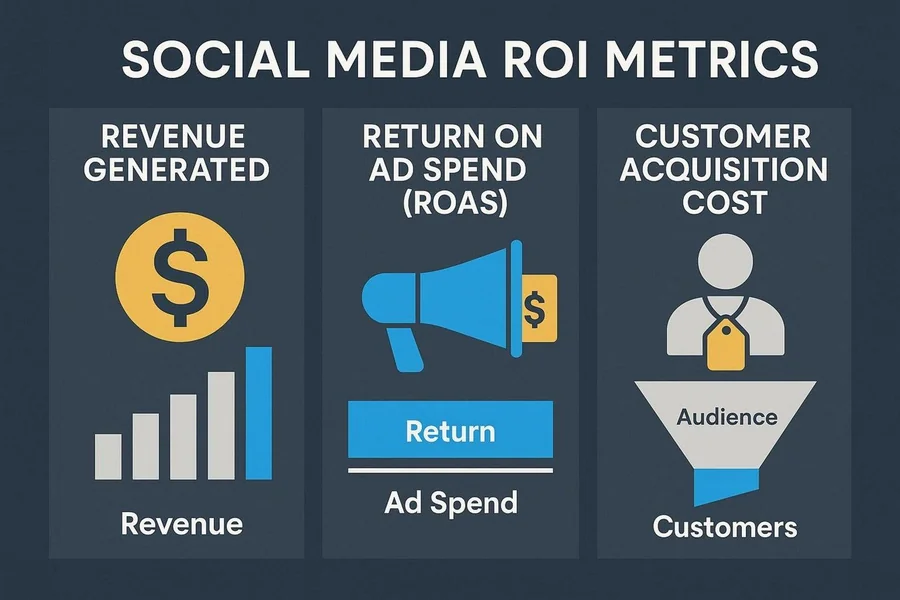
The most direct proof of ROI is revenue from social. That includes e-commerce sales from social platforms and revenue tied to social-sourced leads. With UTMs, pixel events, and CRM links in place, brands can tie revenue back to social. Many marketers list this as a top goal. The Sprout Social Index reports 67% of marketers aim to attribute revenue to social in 2025.
Statista says social networks drove 17.11% of total online sales in 2025, and global sales through social media are set to pass $1 trillion by 2028. That shows the strong commercial power of social channels.
Return on Ad Spend (ROAS)
For paid social, ROAS is a key metric. It shows revenue earned for each dollar spent on ads. Formula: ROAS = (Revenue from ads / Ad spend) × 100. A ROAS above 400% (4:1) is usually a win. HawkSEM notes many strong Facebook campaigns return 4x to 5x. ROAS helps you find the best creatives, audiences, and platforms, so you can improve and scale winning ads.
ROAS = (Revenue from ads / Ad spend) * 100
Customer Acquisition Cost (CAC)
CAC shows how much it costs to win a new customer from social. Formula: Total social spend ÷ New customers acquired. CAC is important for judging profit and scale, especially for paid social. Rising CAC may point to problems with targeting, creative, or competition. Compare CAC to Customer Lifetime Value (CLV) to see long-term payoff.
CAC = Total social spend / New customers acquired
Click-Through Rate (CTR) and Conversion Rate
CTR and conversion rate signal direct business impact. CTR shows how often people click your links, which reflects interest and the strength of your calls to action.
Conversion rate shows what share of those people take the next step-buying, signing up, or filling a form. Together, they connect social actions to progress through your funnel.
Customer Lifetime Value from Social Channels
CLV from social shows the total revenue you can expect from a customer acquired through social over time. If social brings in repeat buyers, referrers, or long-term subscribers, the value goes beyond one sale. This helps you see whether social brings in high-value customers and can support higher CAC for long-term gain.
Social media can raise CLV by boosting engagement, promoting new offers, and driving repeat purchases.
Social Engagement Rate vs. Business Outcomes
Likes and impressions don’t equal ROI by themselves, but deeper actions matter. Comments, shares, saves, and DMs signal real interest. Comments show conversation, shares show value, and saves show lasting relevance.
If engagement is high but conversions are low, your content may connect but lacks a clear call to action. Adjust your approach to link engagement to business goals.
Platform-Specific ROI Benchmarks
Knowing general ROI metrics helps, but performance varies by platform and business model. Different networks serve different goals, and your results may differ based on audience and offer.
ROI Benchmarks by Major Platforms (Facebook, LinkedIn, TikTok, YouTube, Instagram)
Each platform creates unique ROI opportunities. For consumer buys, Facebook leads, with 39% of shoppers going there first when ready to purchase, followed by TikTok at 36% and Instagram at 29%. For Gen Z, TikTok leads for purchases. In B2B, Facebook ranks first for perceived ROI (22% of respondents), with Instagram, TikTok, and YouTube each at 16%.
Many marketers rank Facebook as the top ROI platform (28%), followed by Instagram (22%) and YouTube (12%). LinkedIn has high trust for positive ROI among marketers (70% confidence), with Instagram close behind at 68%. TikTok and Dentsu report a short-term ROI of 11.8%, with 75% of advertisers seeing their best ROI on TikTok versus other channels.
Google’s data suggests YouTube works best across the full customer journey, with awareness content lifting conversions later. The main point: execution beats channel choice. A great campaign on a “lower ROI” platform can outperform a weak campaign on a “higher ROI” one.
ROI Trends Across Different Industries
Trends vary by industry. In B2B, LinkedIn is powerful, influencing 80% of buying decisions and serving as the top revenue channel for 40% of B2B marketers. Brand-led campaigns on LinkedIn deliver four times the bottom-line impact versus those that skip brand metrics, and they lift short-term activation metrics like MQLs by 50%. B2B marketing now leans into two-way engagement and thought leadership.
For e-commerce and consumer brands, social commerce keeps growing at a 13.7% CAGR and should pass $1 trillion by 2028. Influencer marketing matters: 86% of consumers make at least one purchase a year from influencer recommendations, with Gen Z and millennials most likely to act.
Short-form video leads the pack-71% of video marketers say it drives the best ROI, beating long-form (22%) and live video (6%). UGC also beats search engines for influence; 87% say it affects their choices, and 81% will pay more for products with authentic UGC.
How to Accurately Measure and Attribute Social Media ROI
Measuring social ROI well can be hard but important. It takes more than platform stats. You need a clear process for calculation, attribution, and analysis to connect social actions to business outcomes.
Tools have made this easier. Today you can track conversions, tie engagement to business metrics, and separate paid from organic. The harder part is explaining how social supports your bigger business goals with confidence.
Social Media ROI Calculation Formulas
The most common formula is: (Return from social media – Cost of social media marketing) / Cost of social media marketing * 100%. This gives a percentage showing profit from your investment.
For example, if a campaign costs $15,000 (ads + management) and brings $30,000 in revenue, ROI is 100%-one dollar back for every dollar spent. Still, this formula needs a careful look at both direct and indirect returns.
If direct revenue isn’t the goal, adjust what counts as “return.” For brand awareness, use reach, impressions, or share of voice, then assign dollar values based on equivalent paid media costs. For leads, use the value of each lead. Make sure your “return” matches your goals so your math reflects what you want to achieve.
| Metric | What it shows | Simple formula |
| ROI | Profit vs. total social cost | (Return − Cost) ÷ Cost × 100% |
| ROAS | Revenue per ad dollar | Ad Revenue ÷ Ad Spend × 100 |
| CAC | Cost per new customer | Total Social Spend ÷ New Customers |
Attribution Models For Social (First-Touch, Last-Touch, Multi-Touch)
Attribution models help you understand the customer journey and give social media the right credit. Today’s journeys often include many touchpoints across channels. Use a clear definition so your channel comparisons make sense.
- First-Touch Attribution: Gives all credit to the first social touchpoint. Good for awareness campaigns that introduce the brand. If someone finds you via an Instagram ad and later buys via direct search, Instagram gets 100% of the credit.
- Last-Touch Attribution: Gives all credit to the final step before the sale. Simple to set up and helpful for sales-focused campaigns, but it ignores earlier steps that warmed up the buyer.
- Multi-Touch Attribution: Splits credit across all major steps. If someone sees a Facebook ad, reads a blog, then clicks an email to buy, each gets part of the credit. Harder to set up, but gives a fuller picture for complex journeys. GA4 and Meta Attribution Reports can help track cross-channel impact.
Using Analytics Tools and Dashboards
Using analytics tools and dashboards makes measurement much easier. These tools combine data, show clear trends, and visualize results. Sprout Social, Sprinklr, Hootsuite, and Admetrics offer full toolsets.
For example, Sprout Social lets teams track many networks in one place, separate paid from organic, and see what drives results. It links actions to outcomes with engagement trends, audience growth, and post-level data. Sprinklr brings all channels into one dashboard with real-time analytics and reporting, making it easier to track engagement, attribution, and multi-touch conversions.
Other helpful tools include Google Analytics for traffic and conversions, Facebook Business Manager for ad performance, and HubSpot or Salesforce for tracking the journey from social to lead. Custom dashboards in Google Looker Studio can blend social and web data for a full view.
By using these tools, you can see which campaigns, platforms, and content types deliver the best ROI, so you can make data-based decisions and keep improving.
Handling ‘Dark Social’ and Assisted Conversions
“Dark social” is a long-running measurement challenge. It covers shares that happen in private spaces like WhatsApp, Messenger, email, or DMs-often without UTMs-so you lose referral data. This creates gaps and mislabels traffic.
To reduce this problem, add “share via” buttons for messaging apps, use trackable URLs, build private groups, and ask “How did you hear about us?” in forms.
Also, think about assisted conversions. Instead of giving all credit to the last touch, look at every channel that helped the sale. Multi-touch models spread credit along the journey. Use GA4 assisted conversion reports, Meta Attribution Reports for cross-channel roles, and LinkedIn/Twitter Analytics for engagement and conversion data. This gives a truer picture of social’s role and gives upper-funnel content the credit it deserves.
How Social Media Marketing Services Drive Measurable Business Results
Social media services aren’t about pretty posts-they’re about driving results. With goals tied to core business needs, these services turn online interactions into real gains, from leads and loyalty to direct sales. They work by understanding the customer journey and using social at each stage.
In 2025, B2B brands need to move past basic posting and actively build trust, nurture relationships, and convert through planned social engagement. This shift to engagement-led marketing is key to staying relevant and competitive.
Aligning Social Campaigns With Business Objectives
Results start with clear alignment between social campaigns and business goals. Whether you want more awareness, leads, traffic, or sales, each social action should support a measurable outcome. Move away from a one-size-fits-all plan and adapt to each platform and audience.
For example, a new brand might focus on awareness and early sales, with a SMART goal like “Grow to 1,000 Instagram followers in the first three months.” Later, they may focus on engagement and community.
Set goals up front and map KPIs to each-purchases and revenue for sales goals, or form fills and cost per lead for demand capture. This makes it easier to track ROI and keep efforts on target.
Improving Lead Generation and Customer Acquisition
Social media services are very effective for lead gen and customer growth. LinkedIn is strong for B2B: 40% of B2B marketers say it’s their top revenue channel. Using Sales Navigator, industry groups, and high-value content helps brands find and connect with the right people, then guide them with personal outreach.
For B2C and e-commerce, social supports direct lead capture with promoted posts, lead forms, interactive content, and targeted ads. Use trackable links, UTMs, and CRM integrations to tie social actions to leads. This shows which efforts bring in customers and helps lower CAC by improving your campaigns over time.
Boosting Sales and Revenue Attribution to Social Efforts
Social media services can also lift direct sales and link revenue to social campaigns. With social commerce features like Instagram and Facebook Shops, the path from discovery to purchase is short. Global social commerce should pass $1 trillion by 2028, showing the upside for direct sales.
Social also influences buying decisions. The Sprout Social Index says 81% of consumers make impulse buys multiple times a year because of social. With solid tracking like conversion APIs, pixels, and CRM links, marketers can tie sales to specific social campaigns, including assisted conversions across the journey. This clear attribution shows the financial return and helps you improve for more revenue.
Increasing Customer Lifetime Value Through Social Engagement
Social media services play a big role in raising CLV by deepening relationships and encouraging repeat buys. The goal isn’t just the first sale; it’s steady engagement that keeps customers coming back-especially for subscriptions and e-commerce.
Use retargeting and personal content to drive repeat purchases. Build relationships with consistent engagement and responsive support. Also share helpful post-sale content-how-tos, tutorials, and loyalty perks-so customers feel supported.
By tracking repeat purchases from social-sourced customers in your CRM, you can show how social raises CLV and supports higher long-term returns.
Influencing Consideration and Purchase Decisions
Social media services shape both consideration and purchase decisions. In B2B, buyers use LinkedIn, X, and YouTube to research, compare, and check credibility before they talk to sales. Social plays a big role early and mid-journey.
For B2C, the link is even more direct. UGC and influencer posts carry weight: 87% say UGC affects their decisions, and 86% make at least one purchase a year from an influencer. With strong content, real social proof, and clear calls to action, social campaigns can guide people from awareness to purchase-using case studies, demos, and direct social selling like product catalogs and live shopping.
What Are the Most Effective Strategies for Increasing Social Media ROI?
To get the best ROI, you need a plan. It’s more than posting-it’s smart content, smart spend, community building, and using data well. The best strategies are flexible, data-led, and focused on real engagement and conversion.
On social, good execution beats channel choice. Clear branding, quality creative, brand-focused marketing, and full-funnel planning lift returns. A strong campaign on a “lower ROI” platform can beat a weak one on a “higher ROI” platform. Strategy and execution win.
Content Marketing and Storytelling That Converts
The core of social ROI is content that doesn’t just engage-it converts. High-quality content that tells a clear story builds trust and drives action. Go beyond product pushes. Use UGC, behind-the-scenes posts, and customer wins that people connect with.
Format matters too. Short-form video is the top ROI driver for 71% of video marketers. TikTok, Instagram Reels, and YouTube Shorts deliver quick, punchy stories that drive action. Brands like Canva use visuals, Reels, carousels, and creator partners to grow reach and engagement.
Focus on content that informs, entertains, and nudges people to act. Also, repurpose hits-turn a great post into a whitepaper, carousel, or email series to extend its life and get more ROI from the same idea.
Role of Paid Media vs. Organic Growth
Getting the best possible ROI usually means a mix of paid and organic. Organic builds long-term trust and community, but reach can be limited. It often leads to more leads and better retention over time.
Paid ads bring speed and precise targeting. Facebook Ads average a 9.21% conversion rate, and PPC often returns about 200%. The best approach is a mix: organic for authenticity and community, paid for reach, targeting, and quick conversions.
Smart marketers place social inside a wider plan and use each platform for what it does best, so both brand building and short-term wins happen.
Maximizing Impact with Influencer Marketing and UGC
Influencer marketing and UGC can drive strong ROI. Even with some fatigue, influencer campaigns still return about $5.78 per $1 spent on average. Micro-influencers (under 100K followers) often have very engaged audiences and offer strong social proof. DTC brand Nerdy Nuts reached more than $500,000 in monthly sales by working with TikTok creators-showing direct sales impact.
UGC can be even stronger. It builds trust: 87% say UGC affects their decisions, and 81% will pay more and wait longer for products with authentic UGC. Encourage customers to share their experiences and reshare their posts. This strengthens relationships and expands reach.
Blending influencer partnerships with a strong UGC plan taps into real advocacy and boosts conversions and loyalty.
Optimizing Creative and Ad Performance
Creative quality and ongoing ad improvement are very important for ROI. Focus on visuals, copy, and the targeting behind them. Research from Meta and Analytic Partners shows that showing your logo early-within the first two seconds-can drive 5× higher ROI on Facebook. Mobile-first formats (square or vertical) nearly double returns versus non-mobile assets.
On YouTube, creative drives almost half of returns. Ads that follow YouTube’s ABCD guidelines (Attention, Branding, Connection, Direction) can lift sales by 30%. Keep A/B testing visuals, headlines, and calls to action to find winners.
Use AI tools like Admetrics to predict strong ads and shift budget automatically to what works. By improving creative and ads often, you can cut wasted spend, raise conversion rates, and lift ROAS.
Using Retargeting and Multi-Step Campaigns
Most people won’t convert right away. That’s why retargeting and multi-step campaigns are so effective. Retargeting keeps you on people’s minds and guides warm leads by reaching those who engaged but didn’t buy yet. This makes sure interested users keep getting timely messages.
Multi-step campaigns map a path across touchpoints. Retarget LinkedIn video viewers with follow-ups or demo invites. Use Facebook and Instagram to show case studies or webinar invites to people who viewed a product page.
Segment by behavior-blog readers, video viewers, cart abandoners-and deliver personal messages. This personal approach raises conversion rates and squeezes extra value from your earlier social efforts, leading to higher ROI.
Common Mistakes That Undermine Social Media ROI
Social can drive big returns, but many brands hurt results by making common mistakes. Spotting and avoiding these mistakes matters as much as picking good tactics. Often, the gap between leadership goals and team output creates ROI problems.
Many B2B brands struggle because they don’t connect engagement to real outcomes. A mix of these errors leads to wasted budget and missed growth.
Overemphasis on Vanity Metrics
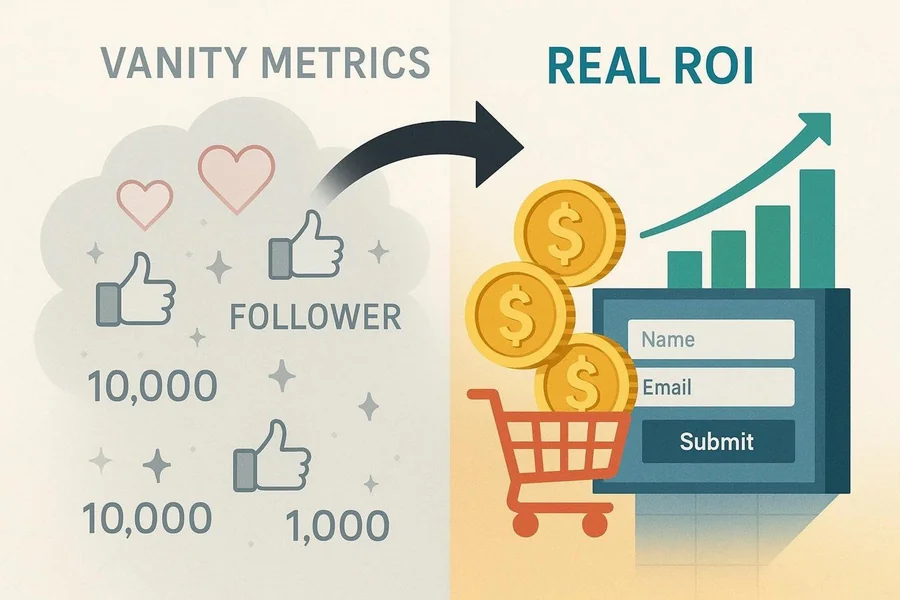
One of the most common mistakes is chasing vanity metrics. Follower counts, basic likes, and surface-level views can look impressive but may not lead to real results. A large audience or a viral post isn’t helpful if people don’t engage with intent or buy.
Reach, CTR, and impressions weren’t built to prove business impact by themselves. Track them, but shift the focus to deeper engagement (comments, shares, saves) and, more importantly, conversions (leads, sales, customer acquisition).
If you rely only on vanity metrics, you get a false sense of success and miss what actually grows revenue.
Neglecting Proper Attribution and Tracking
Another big mistake is weak attribution and tracking. Customer journeys are multi-step, across channels, and can take time. If you use only last-click attribution, you miss the bigger picture and ignore key steps that warmed up the buyer.
“Dark social” makes this worse-private sharing often strips referral data. Without UTMs, pixels, and CRM connections, it’s hard to link social to leads and sales. That leads to poor budget choices and weak insights. Use better attribution models, like multi-touch, and modern analytics tools so social gets fair credit for its role in conversions and outcomes.
Target Audience Research Shortcomings
Weak audience research also hurts ROI. If you don’t know who your audience is, what they want, or where they spend time, your content and targeting will miss. Generic posts and broad audiences mean low engagement, wasted spend, and few conversions. As needs change, a static plan gets stale.
Strong social programs need ongoing audience insights. Use social listening, watch trends, and collect feedback. Platform insights can refine demographics, interests, and behaviors. If you skip this research, even good content won’t reach the right people, and results will suffer.
Inconsistent Brand Messaging
Inconsistent messaging across platforms weakens your brand, confuses people, and hurts ROI. If your voice, visuals, and key messages change wildly across channels or posts, people get a broken experience. That lowers trust, feels less professional, and makes it harder to build a memorable brand.
People expect a consistent brand experience. Inconsistency reduces engagement and brand recall. Keep your message steady across channels to support brand identity, build a clear story, and create stronger connections. This builds trust and helps social efforts feed real business results.
Real-World Examples: Social Media Marketing Services Delivering Proven ROI
Theory is useful, but real cases show how social drives ROI. The examples below show how different businesses-from DTC to B2B-use social to get measurable returns.
Case Study: Leveraging TikTok Influencers To Drive Sales
A clear example comes from Nerdy Nuts, a DTC brand that used TikTok influencers to drive sales. With an initial budget of $2,500 for creator partnerships, they worked with TikTok creators to showcase their peanut butter in engaging videos. The result: a big jump in exposure and more importantly, more sales-over $500,000 in monthly revenue.
By carefully reviewing engagement and referral traffic, the team linked influencer content to real sales. This case shows how focused influencers work-especially on platforms that fit your audience-can turn a small budget into major returns.
B2B Success Stories: Positive ROI from LinkedIn Campaigns
Social, and especially LinkedIn, delivers strong ROI for B2B. LinkedIn is far more than a networking site; it reaches the buyers and decision-makers that matter, influencing 80% of B2B purchases. Research from Les Binet and Peter Field for LinkedIn’s B2B Institute shows brand-led campaigns on LinkedIn deliver four times the bottom-line impact and improve short-term metrics like MQLs by 50%.
B2B brands that focus on LinkedIn-using Sales Navigator, joining industry conversations, posting expert insights, and sending personal messages-see higher-quality leads and shorter cycles. In B2B, a thoughtful LinkedIn plan that favors trust and expertise over hard selling often leads directly to measurable ROI through lead volume and pipeline growth.
Customer Lifetime Value Increase Through Social Nurturing
Raising CLV through social nurturing is another strong ROI path. Think of a subscription brand or online store that uses social to engage after the sale. Instead of stopping at the first purchase, they keep offering value, support, and community.
With personal content, fast support in DMs, private groups, and helpful tutorials, brands can strongly strengthen relationships. This leads to repeat purchases, lower churn, and stronger loyalty. While many company examples are private, the idea is clear: track repeat buys and long-term plans from people brought in or engaged through social media.
You’ll see that social media drives more than one-off sales-it helps build a base of loyal customers and steady revenue. This longer view is common in B2B and brand-led programs, where journeys take time.
Key Takeaways For Achieving Real ROI With Social Media Marketing Services
Real ROI from social is within reach if you take a strategic, data-led approach. Move past vanity metrics and focus on KPIs tied to revenue, leads, and customer value.
Be clear about your goals, then carefully map social goals and metrics to those targets. Whether your aim is revenue, leads, CLV, or brand reputation, every action should serve a measurable goal. Use modern analytics to collect data and tell clear stories that show how social supports business success.
Learn how different attribution models work, and factor in “dark social.” Keep improving your content, creative, and targeting based on live results. Use both organic and paid. And keep your brand consistent, backed by strong audience insight.
With these steps in place, social media marketing services can go from a cost to a core engine for steady business growth.