
Key Takeaways
- Evaluate risks unique to your business and industry.
- Understand the essential types of business insurance and their applications.
- Bundling policies can improve affordability, but they require careful review.
- Research reputable insurers and compare their offerings before making a purchase.
- Schedule regular insurance reviews to ensure your coverage remains up to date.
Securing the correct insurance coverage is crucial for protecting your business financially from unforeseen risks and liabilities. The process can feel overwhelming given the vast number of business insurance solutions available, especially since every industry has unique exposures and requirements. By following a structured approach, you can confidently select the best insurance options suited to your business type and operations.
Being informed and diligent about insurance decisions not only safeguards your enterprise, but it also provides peace of mind—enabling you to focus on growth and daily operations. Whether you’re a small retail owner or running a high-risk construction firm, understanding what to look for in coverage is the first step to financial security and resilience.
For many professionals, the challenge isn’t just finding an affordable policy—but ensuring it covers both the standard and specialized risks of their industry. As you navigate the options, it’s essential to strike a balance between cost, coverage, and provider reliability for comprehensive protection. Discovering the right blend requires a little groundwork, but it pays dividends in the event of an unexpected claim or disaster.
Making well-informed insurance decisions now can prevent significant setbacks later, from financial penalties and lawsuits to uninsured losses that could threaten your business’s viability.
Assess Your Business Risks
Risk assessment is the critical first step in choosing business insurance. Start by mapping out all potential hazards—both common and unique—that your business may encounter. For example, a restaurant faces risks related to food safety and slip-and-fall incidents, while an IT consulting firm might be more concerned about data breaches or professional errors. Listing these risks allows you to identify which types of coverage are non-negotiable and which might be adjusted based on your business’s specific context.
Be thorough in this process: consider customer and employee safety, property and vehicles, cyber threats, legal compliance, natural disasters, and industry-specific regulations. Industry associations and trade groups can offer valuable insights into common risks and claims filed by similar businesses, enabling you to build a well-informed risk profile.
Understand Different Types of Business Insurance
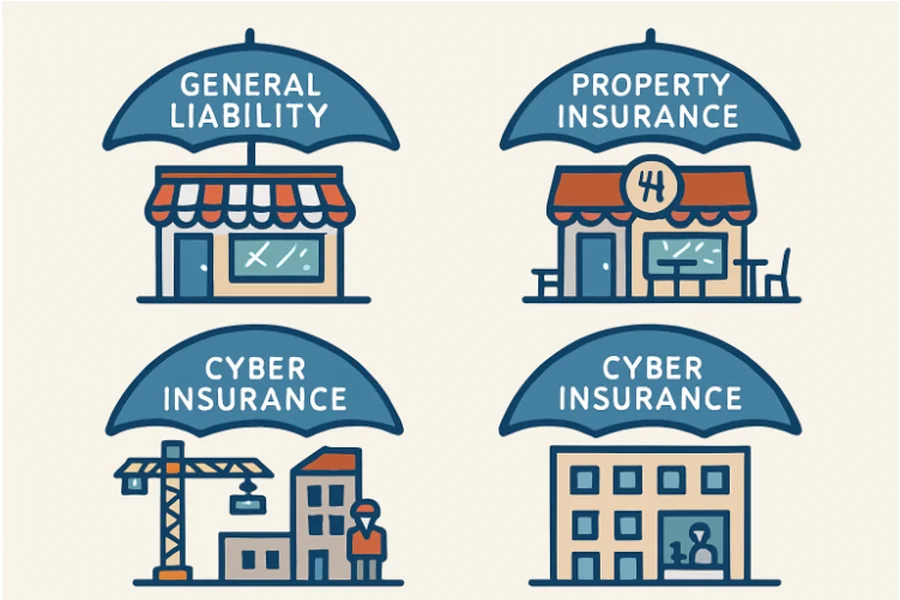
The right insurance solution is typically a mix of several policies tailored to your risk assessment. Here are the most common forms of business insurance and their core benefits:
- General Liability Insurance: Defends your business against third-party claims of bodily injury, property damage, and certain advertising-related risks. Essential for nearly every company.
- Professional Liability Insurance: Also known as “errors and omissions,” this policy protects businesses that provide professional services or advice against potential claims of negligence or mistakes that cause financial loss.
- Property Insurance: Protects your facilities, equipment, inventory, and other assets from covered events, such as fire, theft, or vandalism.
- Workers’ Compensation Insurance: Required in most states for businesses with employees; covers medical expenses and lost wages if an employee is injured on the job.
- Cyber Liability Insurance: Increasingly crucial for any business handling sensitive digital data, guarding against losses from hacking, breaches, and data theft.
Other specialty insurance options—from product liability to employment practices liability and commercial auto—may be relevant depending on your sector. Understanding the intersection of general and industry-specific coverage is key to a complete risk management strategy.
Consider Bundling Policies
Bundling is an effective way to save money without sacrificing vital protection. Many insurers offer package deals such as a Business Owner’s Policy (BOP), which combines general liability and property insurance with optional add-ons for more specialized protection. While bundling offers convenience and often a lower premium, always verify that the included coverage limits and exclusions align with your actual risks. Don’t compromise critical coverage areas simply for cost—ask questions and read the details carefully.
Research Insurance Providers
Choosing the right insurance company is just as vital as selecting the policies themselves. Seek providers that have a track record of reliable claims support and industry experience. Look at public consumer reviews, financial strength ratings (such as those from A.M. Best or Standard & Poor’s), and feedback from industry peers. This will help ensure the provider can pay claims—including large, unexpected ones—without endangering your business’s stability.
Compare Quotes and Coverage
Requesting quotes from several insurers enables you to compare costs and coverages side by side. As you review, look closely at coverage limits, deductibles, policy exclusions, and the claims process. Price alone shouldn’t be the deciding factor: choose a policy that meets your risk requirements and is supported by a provider with a solid reputation. Beware of offers that seem too good to be true, as they might come with critical gaps or complex claims processes.
Consult with an Insurance Professional
A licensed insurance agent or broker serves as your advocate in the complex world of business coverage. They bring knowledge of local regulations, industry risks, and the fine print in policy terms. Professionals will help clarify uncertainties, spot potential blind spots, and recommend cost-saving strategies. Partnering with an expert is particularly important when your business begins to scale, undergoes operational changes, or faces complex exposures.
Regularly Review and Update Your Coverage
Your business isn’t static—and neither are the potential risks it faces. Annual reviews ensure your insurance keeps pace with changes, such as hiring more staff, expanding to new locations, or adding new product lines. Significant events, such as mergers, acquisitions, or entering new markets, demand immediate coverage reevaluation. Staying proactive ensures your protection remains comprehensive as your business adapts and grows, minimizing exposure to emerging risks.
Finding and maintaining the right business insurance solution is an ongoing process that protects your company from setbacks and positions it to recover quickly in the event of disruptive events. A thoughtful, industry-tailored approach to business insurance is an indispensable part of long-term success and resilience.